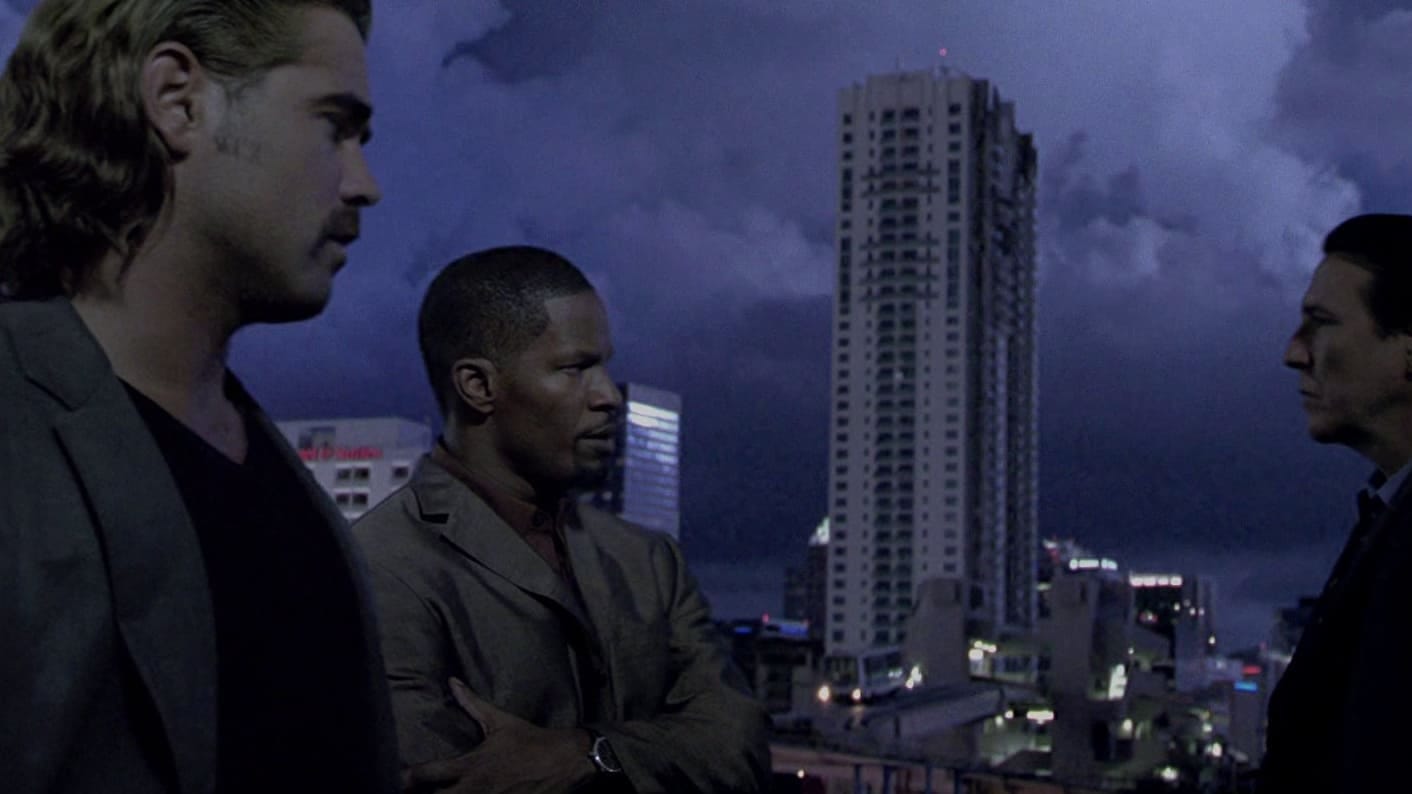
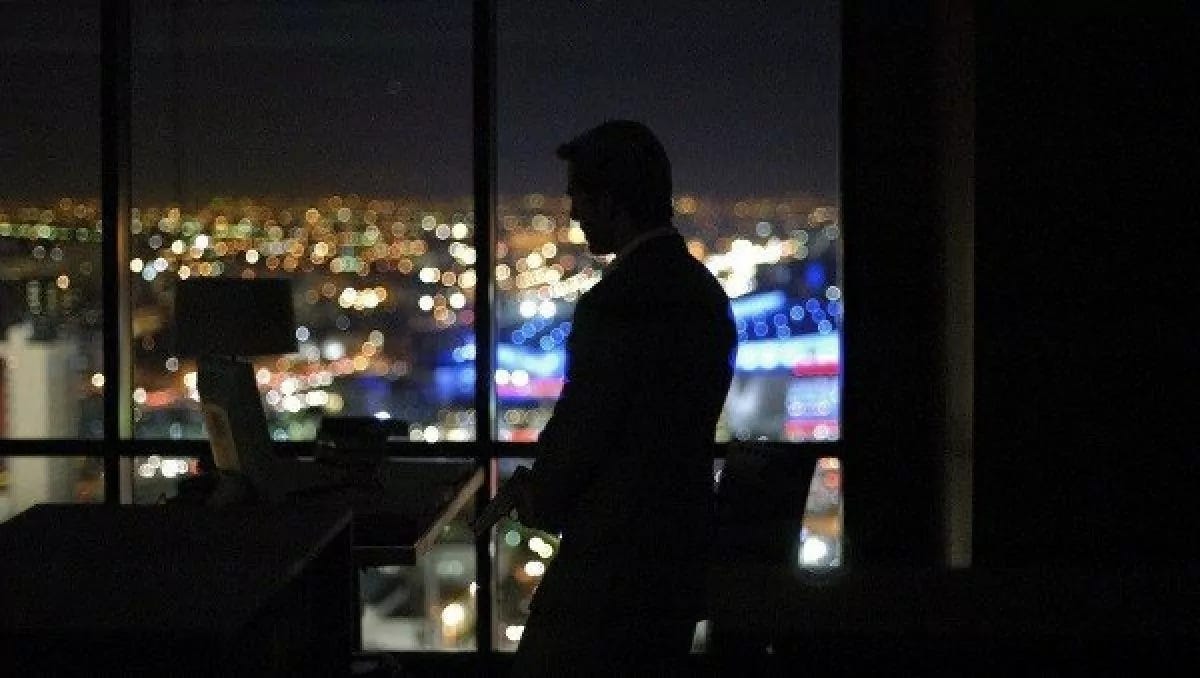
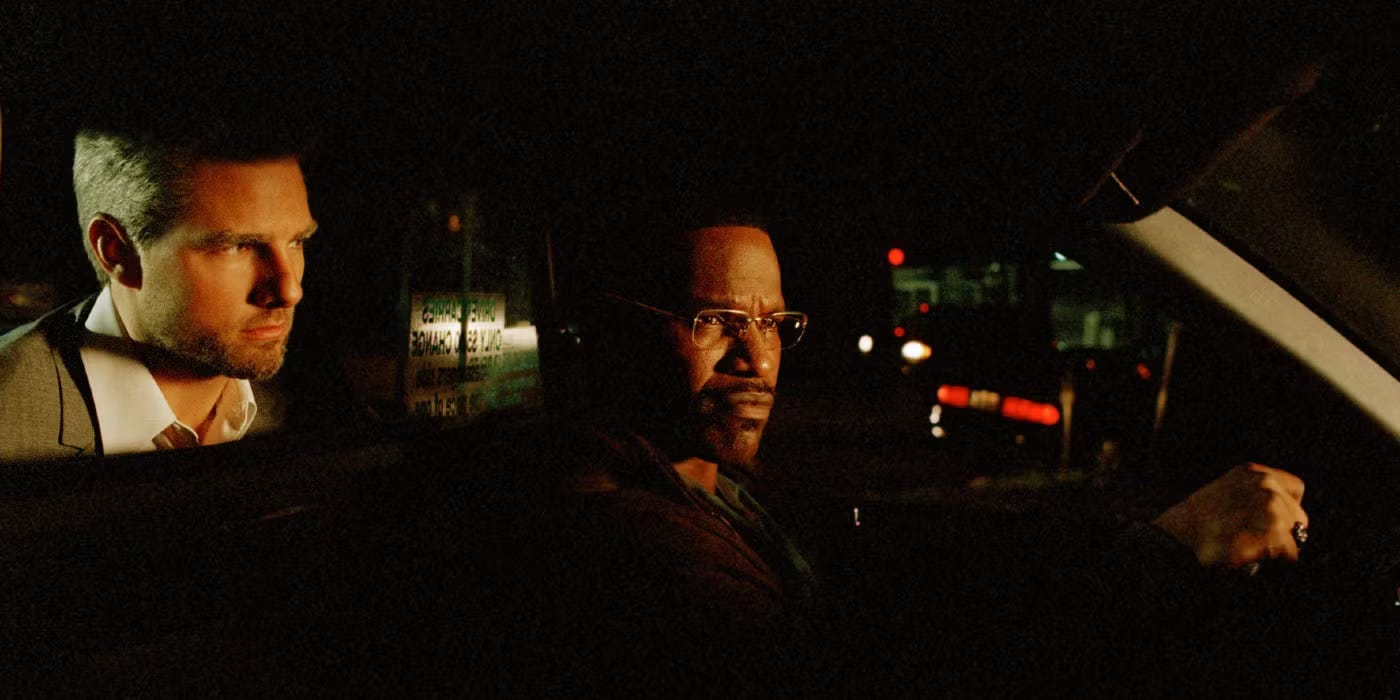
A lot of the discussion around Michael Mann’s mid-oughts films Collateral and MiamiVice focuses on their look. The “early digital camera footage printed on film” process, especially visible in night scenes, went from being dismissed as grainy and washed-out to being celebrated for those same properties.
It’s a cold look, and perfect for these very cold films.
This Substack is reader-supported. To receive new posts and support my work, consider becoming a free or paid subscriber.
I don’t know that Mann changed his approach to Collateral from Heat or Thief or The Insider, but it has a unique coldness to it. This has something to do with the number of people onscreen, which always seems like either too few or way too many.
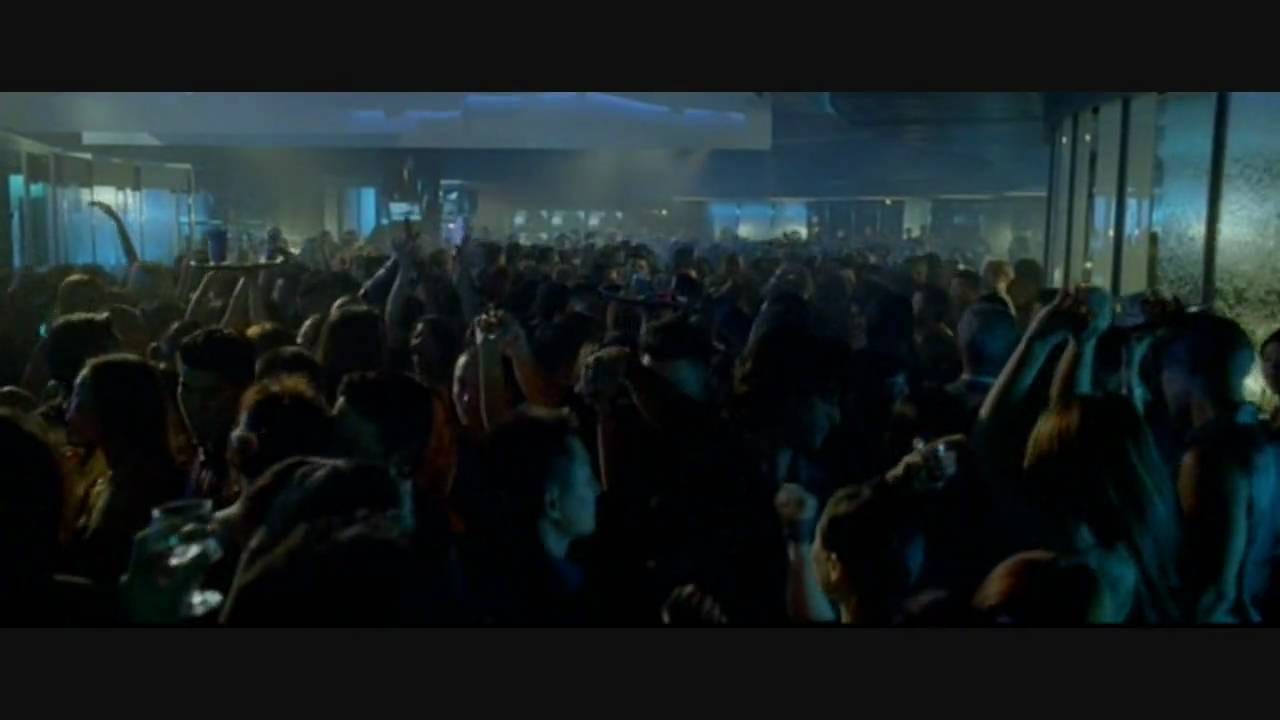
Vincent the hit man (Tom Cruise) and Max the cabbie (Jamie Foxx) seem to glide through an empty Los Angeles, or else be crammed into claustrophobic elevators or nightclubs. They’re a pair of loners brought together for one night, where Vincent attempts to kill off everyone connected to a legal case that threatens “some friends in Cartagena and Culiacán.” Max is Vincent’s unwitting accomplice, his hostage, and possibly the only one who can stop him.
Heat is also about two loners, and that aloof professional character runs throughout Mann’s films. Good at his job. Not great with people. Even Muhammad Ali, legendarily gregarious and traveling with an entourage, is presented that way during the jogging scenes in Ali (also shot digitally).
But those characters have friends, associates, lovers, bosses. Vincent and Max in Collateral seem cut off from everyone. Max doesn’t seem like he knows his own mother, and Vincent sends Max to meet his contact Felix (Javier Bardem).
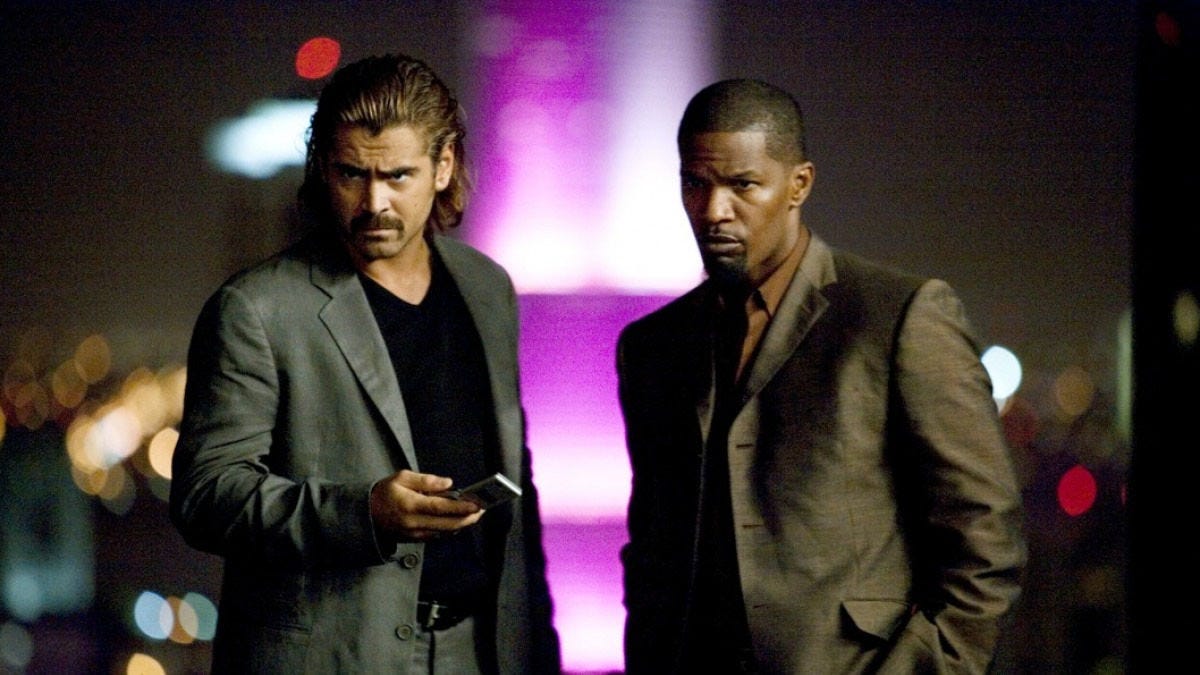
Miami Vice has that same coldness, though Crockett and Tubbs (Collin Farrell and Foxx again) are partners. They never seem warm towards each other, as Don Johnson and Phillip Michael Thomas did in the show.
After their former informant (John Hawkes) dies, Crockett and Tubbs are enlisted to go undercover and catch the supplier of a white supremacist group that has also killed two FBI agents. They’re successful at penetrating the cartel, only for the skinheads and their cartel connection (John Ortiz) to capture their partner and Tubbs’s love interest Trudy (Naomie Harris).
The TV series’ version of Miami is one giant Casablanca-style bazaar. The Miami of the Vice film is a maze of waterfront high rises, trailer parks, and empty construction sites.
As an adaptation or remake, Vice is paradoxically unlike the series (cold to the point of frigid) and exactly like the show (following two undercover cops so far gone they’ve become strangers to themselves).
But the show also had 80s pop music, which allowed the characters to wander broodingly through what are basically silent movies, with Peter Gabriel, Tina Turner et al providing an emotional tinge. They’re not saying or doing anything onscreen, but the music suggests the torrent of emotions they can’t express.
I’m convinced that if MiamiVice had used Jan Hammer’s score over the opening titles, “Crockett’s Theme” for the love scenes, and Phil Collins’s original “In the Air Tonight” over the buildup to the final shootout, the film would’ve been a bigger success. Instead it’s a Jay Z / Linkin Park song in the club, and a terrible “In the Air Tonight” cover over the shootout.
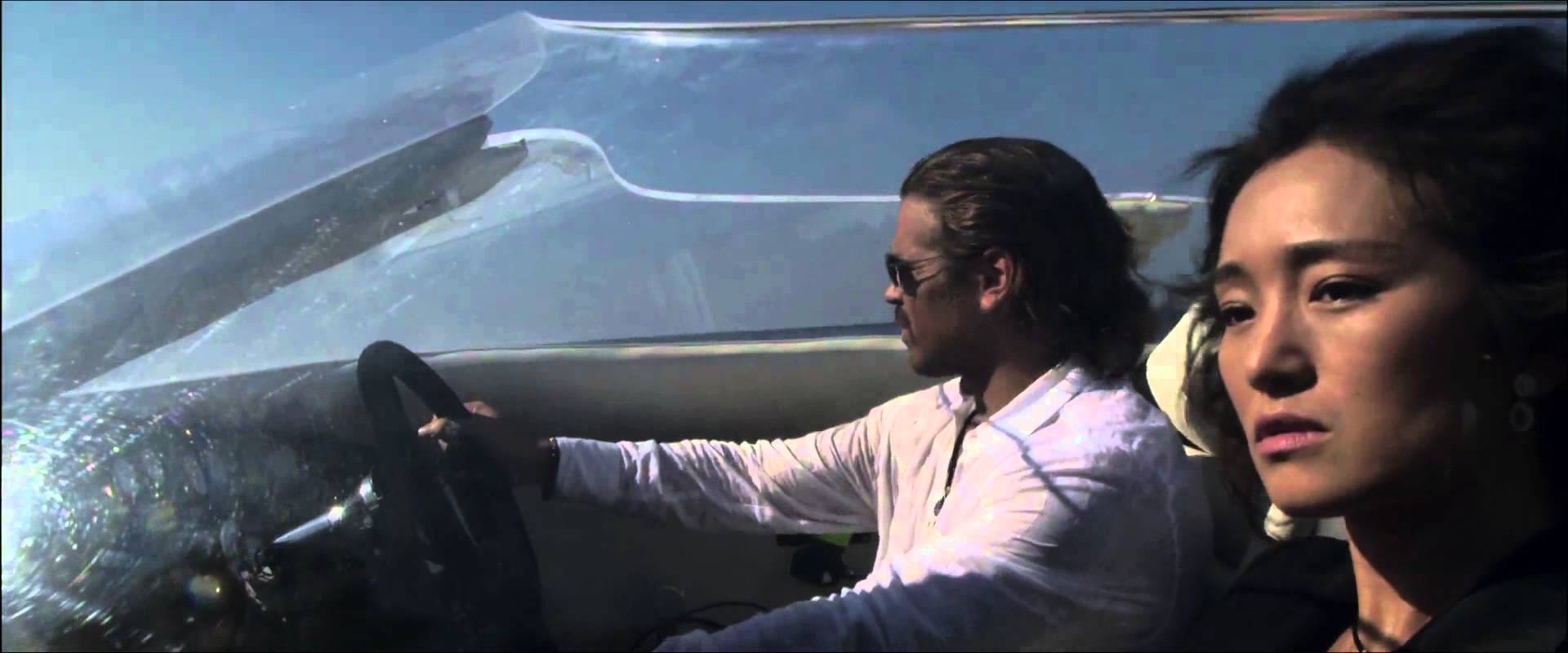
The middle of the film has Crockett jump in a speedboat with a cartel accountant (Gong Li), for a jaunt to Cuba where they fall in love, creating Complications.
I like Gong Li, and I like Farrell’s dirtbag look—he seems to have the facial hair of every character in Heat at the same time—but I can see how the film’s abrupt left turn to focus on their relationship threw some viewers.
Their love scenes are scored to Audioslave, which is an odd choice, and a connective thread to Collateral. An A+ lead singer and an A+ band that never seemed to reach its potential, Audioslave didn’t have the range of Soundgarden or the intensity of Rage Against the Machine.
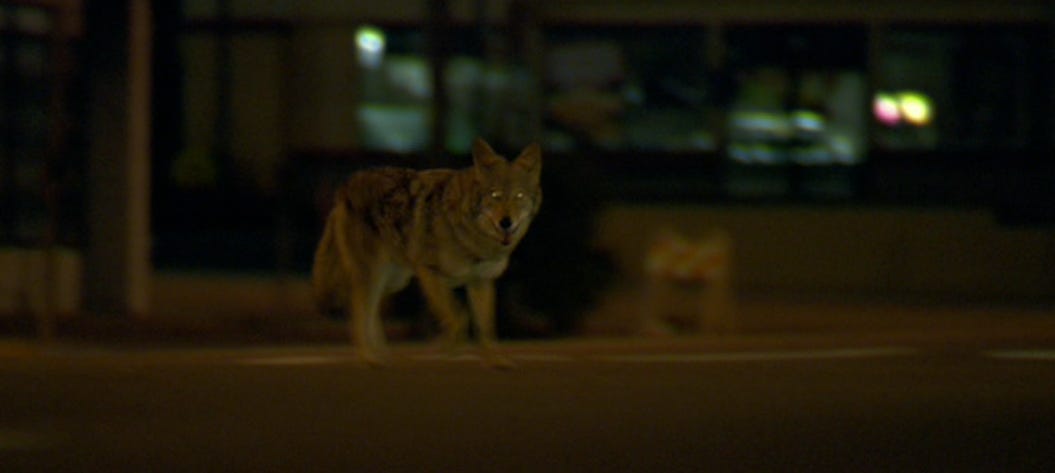
In Collateral there’s a moment where a coyote runs in front of Max’s cab—suggested by something that happened to the director.
“It’s about one in the morning, driving north on Fairfax up into the hills, at the intersection of Fairfax and Santa Monica,” Mann said in an interview with Empire, “and these two coyotes walk across the intersection, like it’s still all wilderness, and they own it. And it was just the attitude of it that stuck with me.”
In the scene, Audioslave’s “Shadow of the Sun” plays, and the characters watch the animal slink across the road. Cruise seems especially thrown by the sighting.
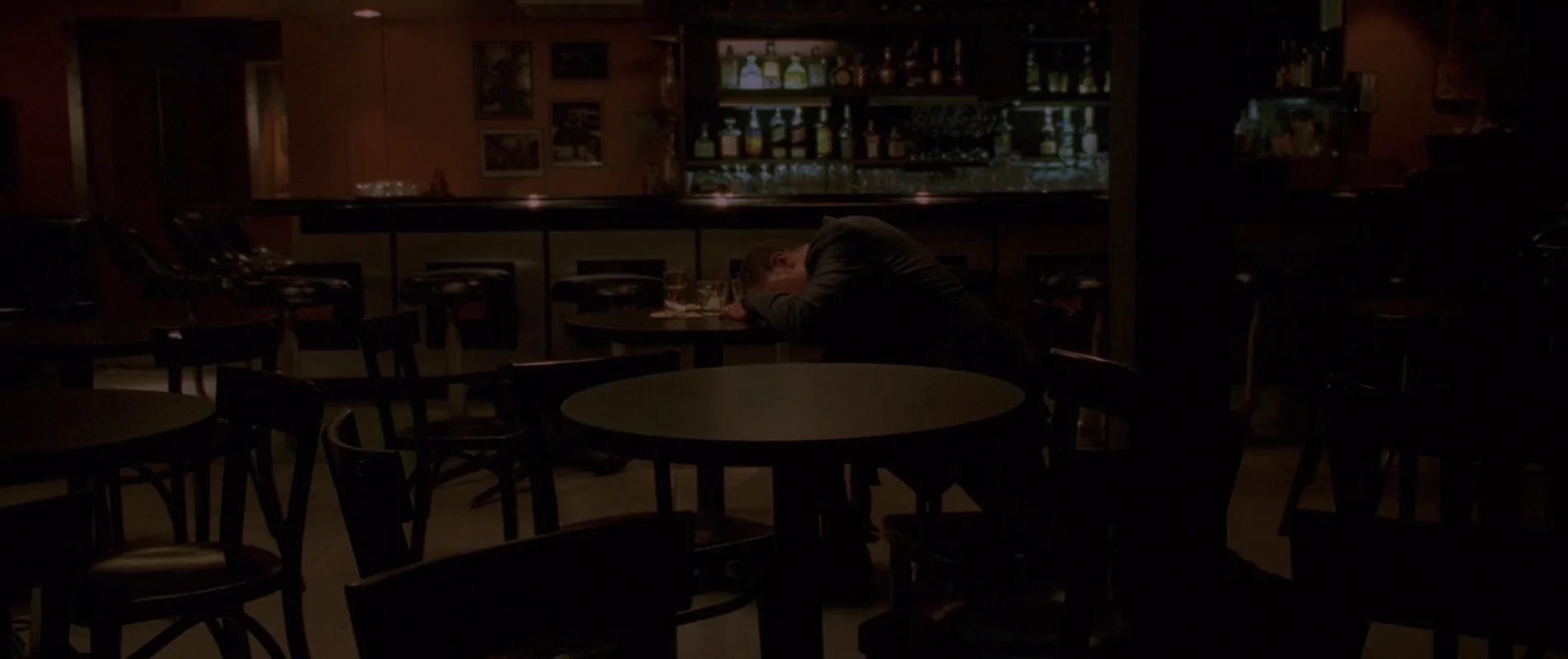
It’s the closest to a Miami Vice TV series moment in either film, where the music suggests the character’s emotions. But it’s also failing at that interiority, like a sociopath trying to mimic an emotion they’ve never felt. There’s a numbness to the scene, or a coldness, to return to that descriptor. The cinematography, the music, the acting and even the time of night all seem exhausted.
Mann kind of lost me with Public Enemies (though the pilot of his David Milch TV series Luck has the greatest horse racing scene of all time), but his Audioslave films are terrific, and don’t look or feel like other films of their time. Maybe because the camera seems to look at everything, and the characters seem to feel nothing.
Sam, we must be traveling on the same wavelength because I listened to Audioslave last week when I mowed the lawn and I've watched a ton of Miami Vice episodes on Pluto lately. I feel the same about Public Enemies too. I also think Ruffalo's detective Fanning in Collateral might be a cousin the Colin Farrell's Crockett.



Sam, we must be traveling on the same wavelength because I listened to Audioslave last week when I mowed the lawn and I've watched a ton of Miami Vice episodes on Pluto lately. I feel the same about Public Enemies too. I also think Ruffalo's detective Fanning in Collateral might be a cousin the Colin Farrell's Crockett.
Vincent from Collateral is the estranged brother Neil mentions to Eady in Heat